1 -
Running-in precautions
Max. rotation speed
Rpm limits to be observed during the running-in period and in normal operation:
1
2
Max. rotation speed up to 1000 km
During the first 1000 km, keep an eye on the revolution meter. The indicator must not exceed 5500-6000 rpm. During the first hours of riding, it is advisable to run the engine at varying load and rpm, though still within the recommended limit.
Twisty roads and gradients are ideal to break in engine, suspensions and brakes effectively. Apply the brakes gently and avoid hard, prolonged braking until covering the first 100 km.This will allow the brake pad lining to wear in properly rubbing on the brake discs. For all mechanical moving parts of the motorcycle to adapt to one another and above all not to adversely affect the life of basic engine parts, it is advisable to avoid harsh accelerations and not to run the engine at high rpm for too long, especially uphill. Furthermore, the drive chain should be inspected frequently. Lubricate as required.
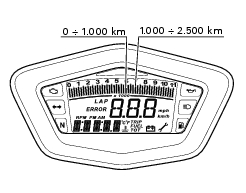
Max. rotation speed from 1000 to 2500 km
At this point, you can squeeze some more power out of your engine, being careful, however, to never exceed 7000 rpm. Following these recommendations strictly will extend the life of your engine and reduce the likelihood of overhauls or tune-ups.
Caution
During the whole running-in period, the maintenance and service rules recommended in the warranty card should be observed carefully. Failure to comply with these rules will release Ducati Motor Holding S.p.A. from any liability whatsoever for resulting engine damage or shorter engine life.
Pre-ride checks
Warning
Failure to carry out these checks before riding, may lead to motorcycle damage and injury to rider.
 
Before riding, perform a thorough check-up on your bike as follows:
Fuel level in the tank
Check fuel level in the tank. Fill tank if needed (Sect. C 2, Fuels and lubricants).
Engine oil level
Check oil level in the sump through the sight glass. Top up with recommended oil if needed (Sect. C 2, Fuels and lubricants).
Brake and clutch fluid
Check fluid level in the relevant reservoirs.
Tyre condition
Check tyre pressure and condition (Sect. C 1.1, Front wheel/Rear wheel).
Controls
Work the brake, clutch, throttle and gear change controls (levers, pedals and twistgrips) and check for proper operation.
Lights and indicators
Make sure lights, indicators and horn work properly. Replace any burnt-out bulbs (Sect. C 1.1, Lights / instrument panel).
Key-operated locks
Ensure that fuel tank plug, passenger seat and RH side glove compartment are correctly closed and locked (Sect. E 2, Fairing).
Side stand
Check the side stand for operation (Sect. P 6, Protection and safety devices) and correct position (Sect. H 5, Stands).