3 -
1
2
3
4
5
6
7
8
9
10
11
12
13
14
15
16
Parts catalogue
Caution
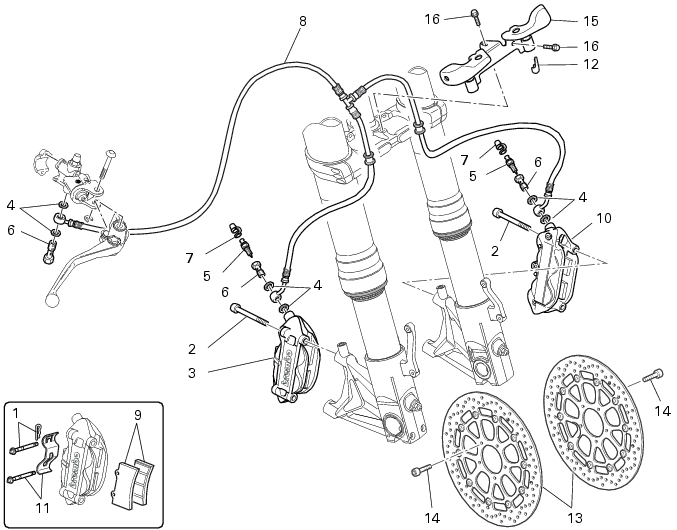
Bold reference numbers in this section identify parts shown in this exploded view diagram. These parts do not appear in the figures near the text.
Braking system maintenance
Warning
Corrosion and irritant hazard. Brake fluid is corrosive and will damage paintwork. Avoid contact with eyes and skin. In the event of accidental contact, wash the affected part with abundant running water and seek medical advice, if necessary.
 
Please refer to Sect. D 4, Maintenance operations, for maintenance instructions (brake pads wear check and replacement, brake fluid change, and so on).
Removing the front brake system
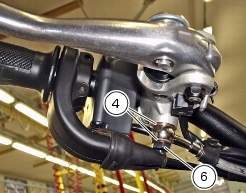
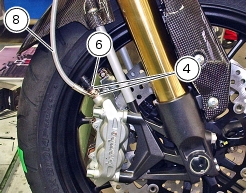
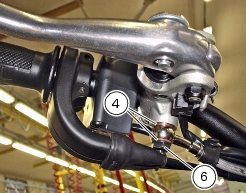
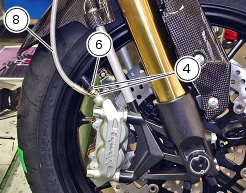
Unscrew the special screw (6) holding the brake hose to the brake cylinder. Collect the seals (4).
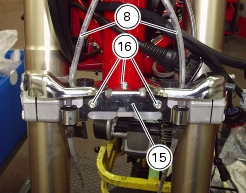
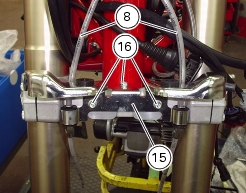
Detach the hose (8) from the brake cylinder. Loosen the screws (16) of the mount (15) and withdraw the hose (8) from the mount.
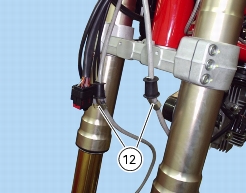
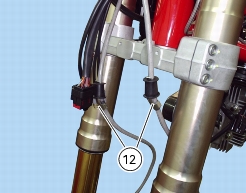
Remove cable glands (12) from hose.
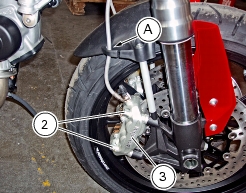
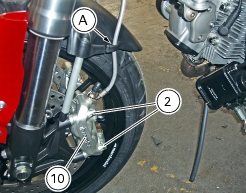
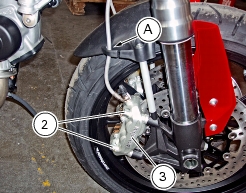
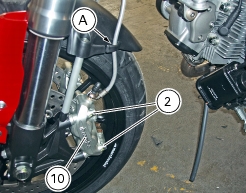
Slide out line (8) from clamp (A) on mudguard.
Remove the brake cylinder (Sect. F 3, Removing the front brake master cylinder).
Unscrew the two screws (2) securing the front brake right caliper (3) to the fork leg.
Repeat the process for the left caliper (10).
Loosen the special screws (6) on both calipers and separate the front brake calipers from line (8), remove the gaskets (4).
Removing the brake discs
The front brake discs consist of a braking surface.
Remove the front wheel (Sect. G 1, Removing the front wheel).
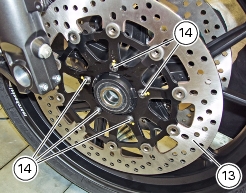
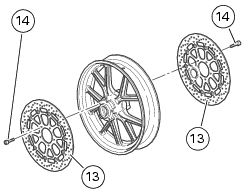
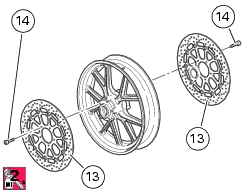
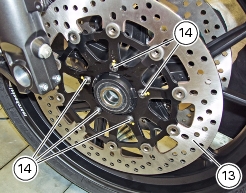
Unscrew the bolts (14) securing the brake disc to the wheel and remove the disc (13). Repeat on the other side of the wheel.
Overhauling the front brake components
Caution
Critical safety components. The brake caliper manufacturer recommends that you do not attempt to service the internal components of the brake calipers. Incorrect overhaul of these critical safety components can endanger rider safety.
 
Maintenance operations on these units are limited to replacing brake pads, fasteners and bleed unit.
Please refer to the exploded view at the beginning of this Section for indications on the replacement of the above components.
Brake discs must be clean without any signs of rust, oil, grease or dirt. Brake discs must not be deeply scored.
For brake disc wear inspection, please see the service limits indicated in "Hydraulic brakes" (Sect. C 1.1).
Refitting the front brake system
Before refitting the brake disc to the wheel rim, clean all contact surfaces thoroughly and smear threadlocker on the threads of the retaining screws (14).
Fit the retaining screws (14) of the brake disc (13) to the front wheel in this sequence: 1-3-5-2-4-6.
Tighten the screws to the specified torque (Sect. C 3, Frame torque settings).
Refit the wheel to the motorcycle (Sect. G 1, Refitting the front wheel).
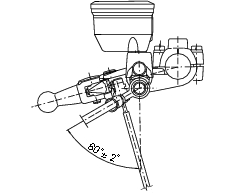
When refitting the brake system, care must be taken to position the hose (8) connectors on the brake cylinder and the caliper at the correct angles.
Warning
Incorrectly positioned hoses can cause brake faults and interfere with moving parts. Correct position is shown in the diagram.
Fit the special seals (4) to the connector when securing the brake hose to the brake caliper or the brake cylinder.
Arrange the connector at the correct angle and then tighten the screw (6) to the specified torque (Sect. C 3, Frame torque settings).
Refit the hose (8) to the front brake calipers (10) and (3), tighten screws (6) to the specified torque (Sect. C 3, Frame torque settings).
Locate the caliper (3) to the disc.
Grease the thread and underhead of the screws (2).
Tighten the two screws (2) retaining the caliper to the front fork leg.
Tighten the screws (2) to the specified torque (Sect. C 3, Frame torque settings).
Position the brake cylinder-and-lever assembly (Sect. F 3, Refitting the front brake master cylinder).
Slide the hose (8) into the headlight bracket (15). Thread the hose through the hose guide (12).
The particular bent shape of the hose guide is designed to restrict hose (8) movement under braking and avoid damage.
Correct position is shown in the diagram.
Tighten the screws (16) to the specified torque (Sect. C 3, Frame torque settings).